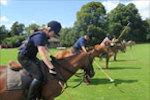
Wed 29th Apr 2015Grass Sickness cases show a spike in May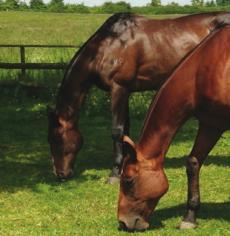 Polo ponies that are kept out at grass could be affected this spring by Equine Grass Sickness Polo ponies that are kept out at grass could be affected this spring by Equine Grass Sickness
Equine Grass Sickness is known to be a potentially lethal disease attributed to a toxin produced by a clostridia bacterium. The same bacteria can cause Botulism in people which, if left untreated, can cause fatal paralysis. Petplan Equine’s veterinary expert Gil Riley explains how the bacteria infiltrates the horses digestive system. “The bacterium lives in the soil and when it spreads onto the grass itself it can be ingested by horses. The toxin that is produced by the bacterium after it has been consumed interferes with the nerves in the horse’s intestine, causing severe dysfunction and colic which is almost always fatal”. In 2014 Petplan Equine paid out nearly £37,000 in claims related to Equine Grass Sickness. The condition is most prevalent between April and September with a spike in cases in May, however it can still strike at anytime during the year.
What to look for:
• Peracute: The horse is found dead in the field having presumably ingested large amounts of the bacteria.
• Acute: The horse usually presents at first with moderate abdominal discomfort but a pulse that is abnormally high.
• Chronic: This is the form of the condition from which affected horses can sometimes recover. It comes on slowly, usually two to three days, and presents as low grade colic with rapid weight loss. Other signs include: a droopy eyelid, dry sticky nasal discharge and faeces balls that are hard and small.
Prevention:
• Avoid introducing new (usually young) stock onto paddocks that have previously produced grass sickness or where the soil has been disturbed – for drainage works for example.
• Avoid a grass-only diet; feed hay in the field or bring horses in at night.
There is currently no cure for the condition but a vaccine is currently being trialled. You have been warned!
Photograph: Avoiding a grass-only diet may reduce the risk of your pony developing Grass Sickness.
 | 
 Contact us
  Mon 24th Aug 2026
 Tue 18th Aug 2026
 Mon 10th Aug 2026
 Thu 6th Aug 2026
 Wed 5th Aug 2026
 Mon 3rd Aug 2026
 Tue 28th Jul 2026